



 Eat & Drink
Chile spans over 4,200 kilometers of Pacific coastline. The Andes mountains and the cold ocean current shape this long land. This geographical variety makes A Food Lover’s Guide to Chilean Cuisine a helpful resource for exploring underrated South American flavors.
Travelers will discover how indigenous Mapuche traditions blend with Spanish colonial customs to create comforting plates. Enjoying these habits requires an open mind. You need an appetite for raw ocean catches, corn delicacies, and slow-cooked stews.
Local food stalls reveal a wide variety of ingredients defining the national identity. Visitors can explore busy spots like Santiago’s Mercado Central with confidence. Knowing regional specialties makes the trip much easier.
Introduction to A Food Lover’s Guide to Chilean Cuisine
When compiling A Food Lover’s Guide to Chilean Cuisine, we focused on how geography shapes local tastes. The northern desert, central valleys, and southern Patagonia each feed the national kitchen. These distinct zones yield very different ingredients.
Merquén remains a defining element of this kitchen. This traditional Mapuche seasoning blends smoked goat’s horn chili pepper with toasted coriander and sea salt. It adds a smoky warmth to many local plates.
Learning these basic flavors helps diners appreciate the work behind simple recipes. The following sections detail the main culinary highlights of this long country.
Natural borders kept agricultural methods safe for centuries. The Andes Mountains and the Pacific Ocean shield local farms. This defense protects crops from pests and helps organic growing thrive.
Coastal Seafood Specialties in A Food Lover’s Guide to Chilean Cuisine
While researching for A Food Lover’s Guide to Chilean Cuisine, we found that the cold Humboldt Current provides cold, clean water. Coastal cities like Valparaíso serve daily catches of unusual marine life. This current keeps the seafood exceptionally fresh.
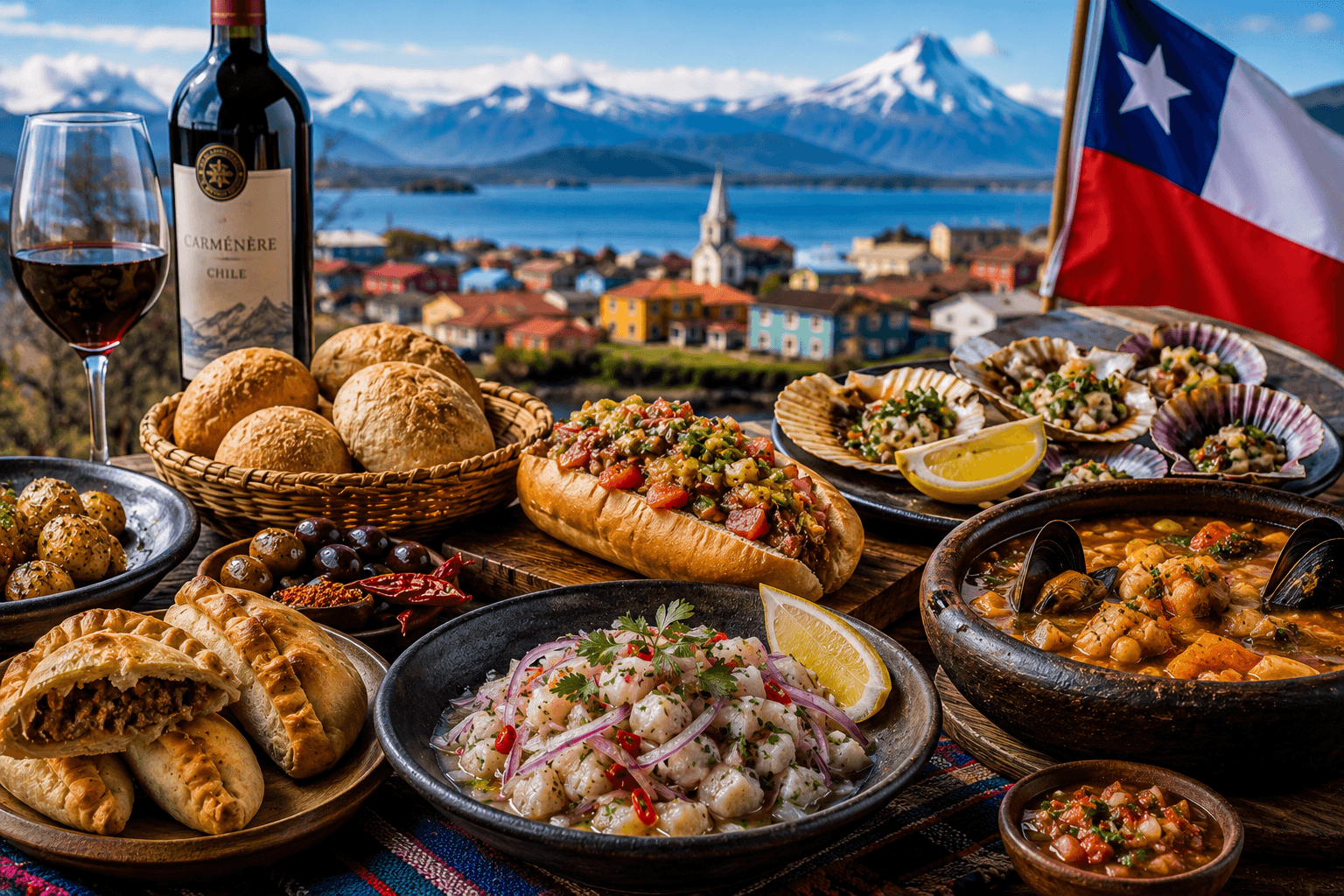
Caldillo de congrio is a famous conger eel soup. The poet Pablo Neruda wrote an ode to this steaming bowl. It mixes tender fish, hot broth, potatoes, onions, carrots, and white wine.
Another coastal favorite is the pastel de jaiba, a rich crab bake served in clay pots. This recipe uses local rock crab meat mixed with cream, soaked bread, and melted cheese. It feels heavy and satisfying.
Shellfish fans must visit seaside markets for machas a la parmesana. These Chilean surf clams bake in their shells with butter, wine, and cheese. They offer a great start to any coastal meal.
- Caldillo de Congrio: A rich eel soup served in clay bowls to keep it piping hot.
- Pastel de Jaiba: A thick crab bake finished with toasted cheese on top.
- Erizos del Mar: Raw sea urchins dressed with onions, cilantro, and fresh lemon juice.
A Food Lover’s Guide to Chilean Cuisine: Hearty Land Dishes
No section of A Food Lover’s Guide to Chilean Cuisine would be complete without looking at the fertile central valleys. These farming regions supply the ingredients for classic comfort food. The soil here is incredibly rich.
Pastel de choclo stands out by mixing sweet and savory flavors. The base contains spiced beef, chicken, black olives, raisins, and hard-boiled eggs.
Cooks spread a sweet corn and basil paste over the meat before baking it to a golden crust. Humitas use a similar corn mix but wrapped in green husks and boiled. They are simple yet deeply satisfying.
On cold days, cazuela offers great comfort. This broth contains a bone-in piece of meat, a whole potato, a sweet pumpkin slice, and corn. It is a rustic household staple.
Empanadas de pino are the most common street food. These large baked pastries hold a filling of ground beef, onions, olives, and egg. Wood-fired clay ovens give them a dark, crispy crust.
- Pastel de Choclo: A baked corn pie layered with beef and chicken.
- Humitas: Pureed corn packages seasoned with basil and steamed.
- Cazuela: A clear broth soup served with large pieces of meat and squash.
| Region | Signature Dish | Key Ingredients |
|---|---|---|
| Northern Chile | Chairo | Llama meat, chuño potato, corn, beans |
| Central Valley | Charquicán | Dried beef, pumpkin, potatoes, corn |
| Chiloé Island | Curanto | Shellfish, pork, chicken, potato flatbreads |
Sweet Traditions: A Food Lover’s Guide to Chilean Cuisine
Local desserts frequently feature manjar, a sweet caramelized milk spread. This rich paste fills cakes, pastries, and cookies. It is a daily treat for many locals.
Alfajores are round cookies joined by a thick layer of manjar. Bakers dust them with sugar or coat them in dark chocolate. They pair perfectly with afternoon black tea.
Mote con huesillo is a cold street drink that functions as a dessert. It features dried peaches cooked in sweet syrup. The liquid is poured over soft wheat grains in a tall cup.
Sopaipillas are fried pumpkin flatbreads eaten on rainy winter days. These crispy dough disks taste great with spicy pebre sauce or sweet chancaca syrup. The sweet soaked version is called sopaipillas pasadas.
- Mote con Huesillo: A cold sweet drink loaded with peaches and wheat.
- Cuchuflí: Thin wafer tubes stuffed with manjar.
- Leche Asada: A baked milk custard with a firm, caramelized top.
Traditional Drinks: A Food Lover’s Guide to Chilean Cuisine
No dining trip through Chile is complete without exploring the local drink options. Natural barriers protect Chilean vineyards from insect pests. This isolation has kept the vines healthy for centuries.
The Carménère grape variety grows well in the Central Valley. It disappeared from European soil in the nineteenth century but found a safe home here. This red wine goes well with grilled meats and heavy stews.
The Pisco Sour is a classic local cocktail. It blends grape brandy, lime juice, syrup, and egg whites. This tart drink cuts through heavy appetizers like empanadas.
Craft beer has grown popular in southern cities like Valdivia. German immigrants introduced classic brewing methods long ago. Today, local brewers use clean Patagonian water to make fine ales and stouts.
Concluding Thoughts
Exploring these regional flavors gives travelers a deep look into local culture. Every town tells a story through its markets and cooking styles. The focus remains on simple, honest cooking.
Using A Food Lover’s Guide to Chilean Cuisine helps travelers find the best spots. Planning a trip around these classic plates ensures a true taste of local heritage. Every meal becomes an opportunity to learn.


Comments are closed