
 Chile Calendar
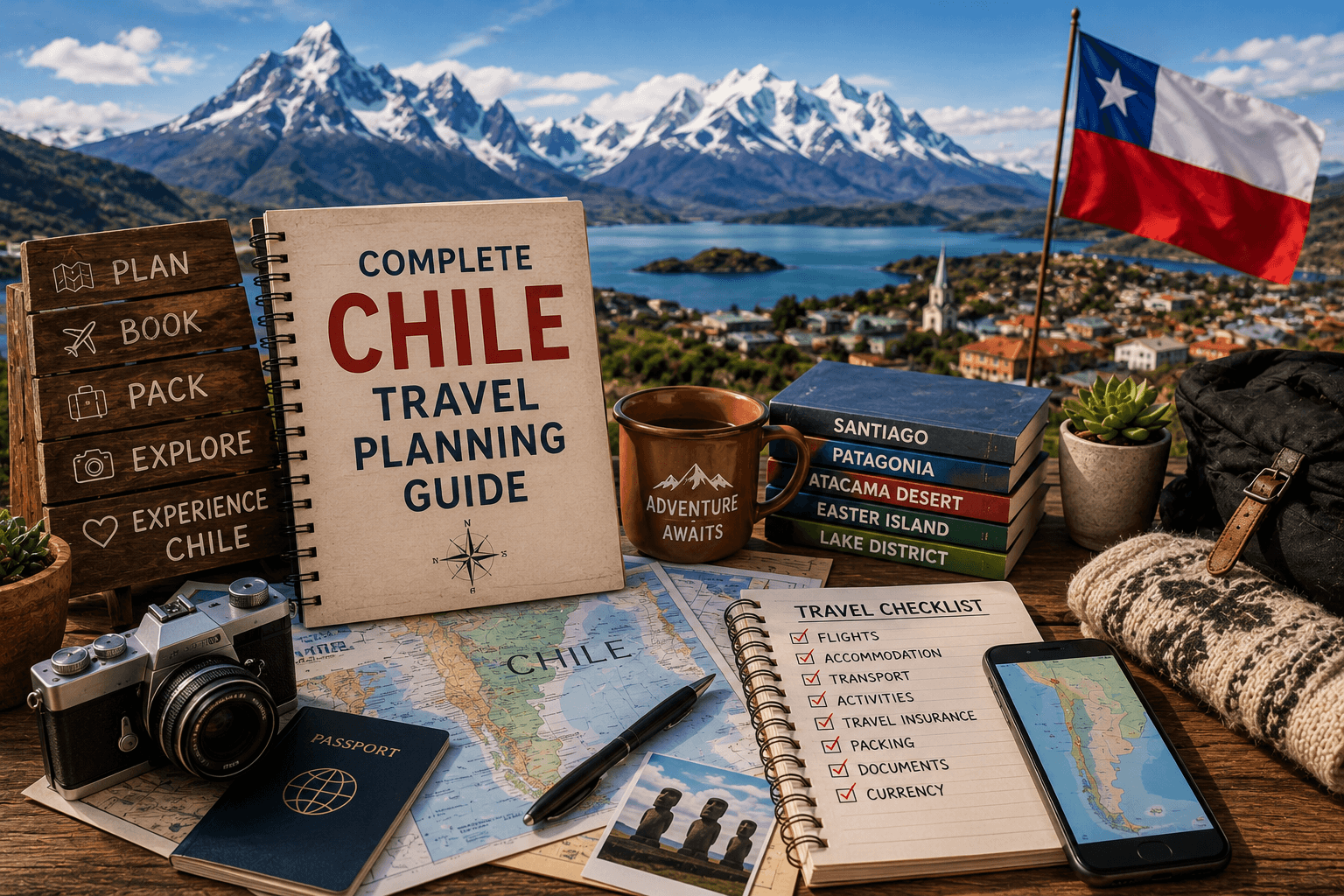
Chile stretches over 4,270 kilometers from north to south, packing the driest desert on earth and colossal glacial fields into one slender strip of land. Moving across this wild geography requires careful attention to transit options, gear choices, and shifting seasons. Consulting a Complete Chile Travel Planning Guide helps travelers save hours of transit headache across these diverse environments.
This Complete Chile Travel Planning Guide offers practical steps to organize your journey from the high-altitude Atacama to the windy fjords of Patagonia. You will find detailed routes, packing checklists, and localized budget estimates. Sorting out these varying microclimates beforehand ensures a smooth South American journey in 2026.
Geographic Regions in Your Complete Chile Travel Planning Guide
Chile naturally splits into five geographic areas, each calling for a different set of preparations. The Norte Grande is home to the high-altitude Atacama Desert, where visitors wander salt flats at 2,300 meters and high-altitude geysers at over 4,000 meters above sea level. Giving your body forty-eight hours to adjust to the elevation helps prevent sudden altitude sickness.
Local experts advise drinking plenty of water and skipping heavy meals during your first few days in the desert.
The Central Valley holds the capital city of Santiago and historic coastal gems like Valparaiso. Most long-haul travelers arrive here first at Arturo Merino Benitez International Airport. From there, regional buses provide simple connections to coastal vineyards and cultural centers.
If you consult a Complete Chile Travel Planning Guide, you will find that Santiago serves as a highly convenient base for short day excursions.
Down south, Patagonia demands heavy-duty gear because of volatile ocean weather systems. Torres del Paine National Park remains the main draw for multi-day hikers tackling the famous W-Trek. Booking campsites along this path half a year ahead is required to guarantee your spot.
Wise travelers always pack windproof outer layers and reliable, worn-in hiking boots for the southern trails.
| Region | Best For | Key Highlight |
|---|---|---|
| Atacama Desert | Stargazing and high-altitude lagoons | Geysers and salt flats |
| Central Valley | Urban exploration and wine tasting | Santiago and Valparaiso |
| Patagonia | Glacier hiking and wilderness backpacking | Torres del Paine W-Trek |
Seasonal Variations and Your Complete Chile Travel Planning Guide
Deciding when to go depends entirely on which latitudes you want to explore. Southern summer runs from December to February, delivering the warmest days and longest sunlight hours in Patagonia. This busy window also brings premium hotel prices and crowded paths.
Keeping a Complete Chile Travel Planning Guide handy helps you manage these seasonal spikes in local prices.
Spring from October to November and autumn from March to April offer quieter windows. These shoulder months bring beautiful leaf changes in the south and far thinner crowds in the national parks. Lower wind speeds in Patagonia during these weeks make outdoor activities much easier.
Skiers head to central Andes resorts like Valle Nevado from June to August. Up north, the desert stays open year-round, though winter nights in Atacama regularly plunge below freezing. Carrying a Complete Chile Travel Planning Guide will help you pack for daily shifts of up to thirty degrees Celsius.
Logistics and Safety in the Complete Chile Travel Planning Guide
Local airlines run frequent flights between Santiago and regional points like Calama or Punta Arenas. Buying these tickets months ahead through LATAM or Sky Airline drops the price. Long-distance buses offer a cheaper choice, especially if you book overnight sleeper seats.
Cards work well in big cities, but you will still need Chilean Pesos. Small villages, local craft stalls, and park gates often require physical cash. Planning your expenses with this Complete Chile Travel Planning Guide suggests keeping eighty US dollars a day for basic trips, while comfortable mid-tier travel runs closer to two hundred US dollars.
Chile ranks high for safety in South America, though pickpockets target crowded transport hubs. Keep your phone and wallet secure on the Santiago metro and avoid showing off expensive cameras. Getting travel insurance that covers high-altitude hiking and medical evacuation is a smart move.
Packing Tips and the Complete Chile Travel Planning Guide
Wearing multiple layers is the best defense against extreme daily weather changes. A solid waterproof and windproof jacket is a must if you plan to travel south of Puerto Montt. Synthetic shirts work much better than cotton by drying quickly when you sweat.
These simple trail strategies will keep you warm and dry during sudden downpours.
Well-worn boots with ankle support prevent slips on rocky paths. High-protection sunscreen and polarized sunglasses shield your eyes and skin from the strong sun in both the desert and the glaciers. You will also need a travel adapter for the local Type C and L wall plugs.
Another useful tip in this Complete Chile Travel Planning Guide involves carrying a reusable purifying bottle to avoid plastic waste. Tap water is fine to drink in major cities, but remote spots require filtration. Drinking water constantly is key when facing both dry desert air and mountain winds.
Mastering Your Journey with this Complete Chile Travel Planning Guide
Pulling off a trip across this long nation requires careful scheduling and realistic expectations about transit times. Distances are huge, meaning trying to see everything in under two weeks leads to exhaustion. Limit your focus to two primary areas if you only have ten days to spare.
Booking park permits, local flights, and southern stays early helps you avoid high fees and sold-out rooms. Watch the weather forecasts carefully before heading up into the mountains or down into Patagonia. Applying the advice in this Complete Chile Travel Planning Guide ensures a smooth, safe, and memorable journey in 2026.


Comments are closed