



 Local culture
Chile extends over 4,270 kilometers along the edge of the Pacific Ocean. This narrow strip of land hosts a spirited heritage born from geographical isolation and varied ancestral lineages. Curious travelers who visit this South American nation in 2026 will see how physical geography shaped a distinct way of life.
You can Discover the Rich Culture and Traditions of Chile by exploring local celebrations, regional food, and native legacies.
This detailed overview offers clear perspectives on the country’s social habits, musical genres, and old traditions. Our goal is to help visitors connect with local life through genuine interactions.
Discover the Rich Culture and Traditions of Chile with Seasonal Celebrations
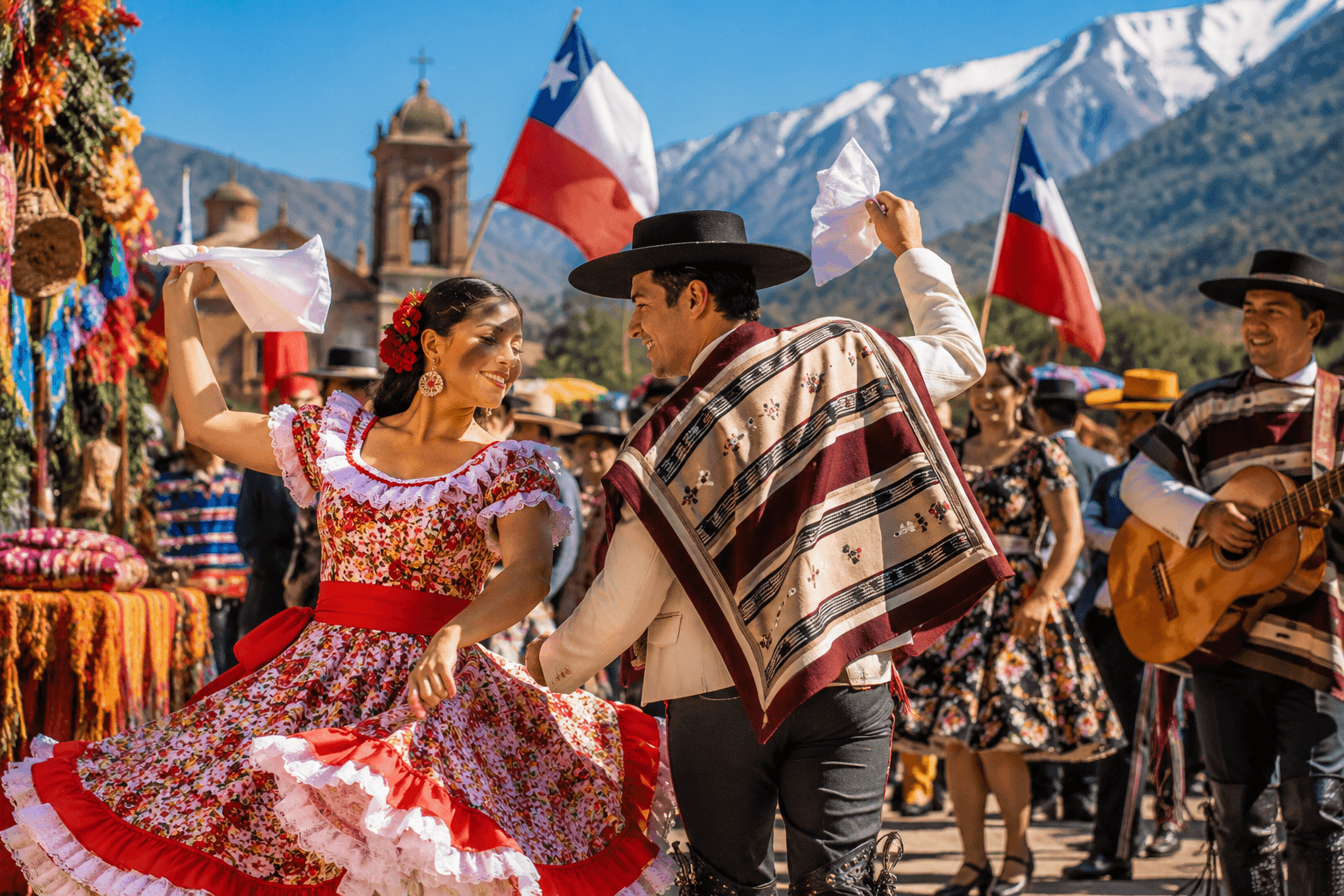
Yearly festivals showcase a blend of Spanish colonial history and native spiritual beliefs. The Fiestas Patrias on September 18 mark the start of the nation’s independence fight with massive parties. Families meet in temporary open-air shelters called fondas to eat, drink, and dance the cueca.
In the dry north, the Fiesta de la Tirana takes over an Atacama desert oasis every July. More than 200,000 pilgrims arrive to watch the Diablada, a traditional devil dance honoring the Virgin of Carmen. Performers wear heavy, bright masks and intricate costumes while dancing to loud brass bands.
- Fiestas Patrias: A national holiday on September 18 marked by open-air fondas and classic folk games.
- Fiesta de la Tirana: A northern desert festival featuring the dramatic devil dance and brass bands.
- Valparaíso New Year: A coastal spectacle known for a massive fireworks show over the ocean.
Discover the Rich Culture and Traditions of Chile through Gastronomy
Local kitchens rely on the cold waters of the Pacific and fertile farm valleys. On the southern islands of Chiloé, locals still prepare curanto, an ancient feast dating back over 6,000 years. This meal combines shellfish, meats, potatoes, and vegetables cooked over hot stones inside an earth pit.
Another daily favorite is the empanada de pino, a savory baked pastry stuffed with spiced beef, onions, raisins, olives, and boiled egg. Experiencing these local recipes helps travelers Discover the Rich Culture and Traditions of Chile through its food.
| Dish Name | Origin Region | Main Ingredients | Cooking Method |
|---|---|---|---|
| Curanto | Chiloé Archipelago | Shellfish, pork, potatoes, chicken | Pit-cooked over hot stones |
| Empanada de Pino | Central Valley | Beef, onions, olives, raisins, dough | Oven-baked |
| Charquicán | Andean Regions | Pumpkin, potatoes, dried beef, corn | Stewed in a single pot |
Discover the Rich Culture and Traditions of Chile through Folk Music
The cueca has been the official national dance since a state decree in 1979. It mirrors the courtship dance of a rooster and a hen, with partners waving white handkerchiefs while swirling around each other. Musicians drive the dance with guitars, accordions, and rapid handclapping.
In the mid-1900s, the New Chilean Song movement shook up the music scene by mixing folk sounds with political messages. Folk musicians like Violeta Parra and Víctor Jara gathered old country melodies and shared them with the world. Parra built a community space in Santiago to keep these rural arts alive.
- Charango: A tiny stringed lute, once crafted from armadillo shells, heard in northern Andean towns.
- Kultrún: A sacred drum used by Mapuche spiritual leaders during ceremonies.
- Guitarra Traspuesta: A guitar tuned to unique, non-standard scales to play old country tunes.
Discover the Rich Culture and Traditions of Chile and Indigenous Heritage
The Mapuche make up the largest native group in the nation, accounting for around 10 percent of the citizenry. Their ancestral lands, known as Wallmapu, lie in the southern forests where many still speak their native tongue, Mapudungun. Daily life traditionally revolves around the ruca, a thatched-roof home, and the guidance of the machi healer.
Up north, the Aymara people tend their high-altitude farms in the dry Andes. They use old stone terraces to cultivate native crops like quinoa and potatoes. Meeting these communities offers a direct path to Discover the Rich Culture and Traditions of Chile.
- Mapuche Silverware: Heavy metal jewelry like the trarilonko headbands worn by female leaders.
- Rapa Nui Wood Carvings: Detailed wood figures representing ancestral figures on Easter Island.
- Aymara Textiles: Warm alpaca blankets woven with patterns that tell local family histories.
Discover the Rich Culture and Traditions of Chile in Daily Life and Literature
Local social life centers on warmth, hospitality, and shared habits. Drinking yerba mate, a strong herbal brew, remains a common social custom in the cold southern plains of Patagonia. Friends pass a single hollow gourd and metal straw around the circle to show trust and friendship.
Poetry runs deep in the local identity, earning this land the title of the Country of Poets. Gabriela Mistral became the first Latin American writer to win the Nobel Prize in Literature back in 1945. Pablo Neruda followed her in 1971, leaving behind three unusual homes that are now museums.
To successfully Discover the Rich Culture and Traditions of Chile, visitors should spend time in local neighborhoods. Start by attending regional holidays like the Fiestas Patrias to feel the rhythm of the national dance.
Next, try historic dishes like curanto to see how local geography shapes family kitchens. Finally, learn about Mapuche and Aymara histories to see how deep the country’s roots run.
These simple steps offer a genuine route to understanding this South American land. This diverse heritage provides an unforgettable journey for any curious traveler.


Comments are closed